Five checks before any AI image reaches my studentsAI 图片给学生看之前,我做的五项检查
The tools are fast and confident, and sometimes wrong. This is the ten-minute list I run on every picture, film and song. It has saved me twice.工具又快又有自信,但有时候是错的。这是我给每张图、每段影片、每首歌都会过一遍的十分钟清单。它已经救过我两次。
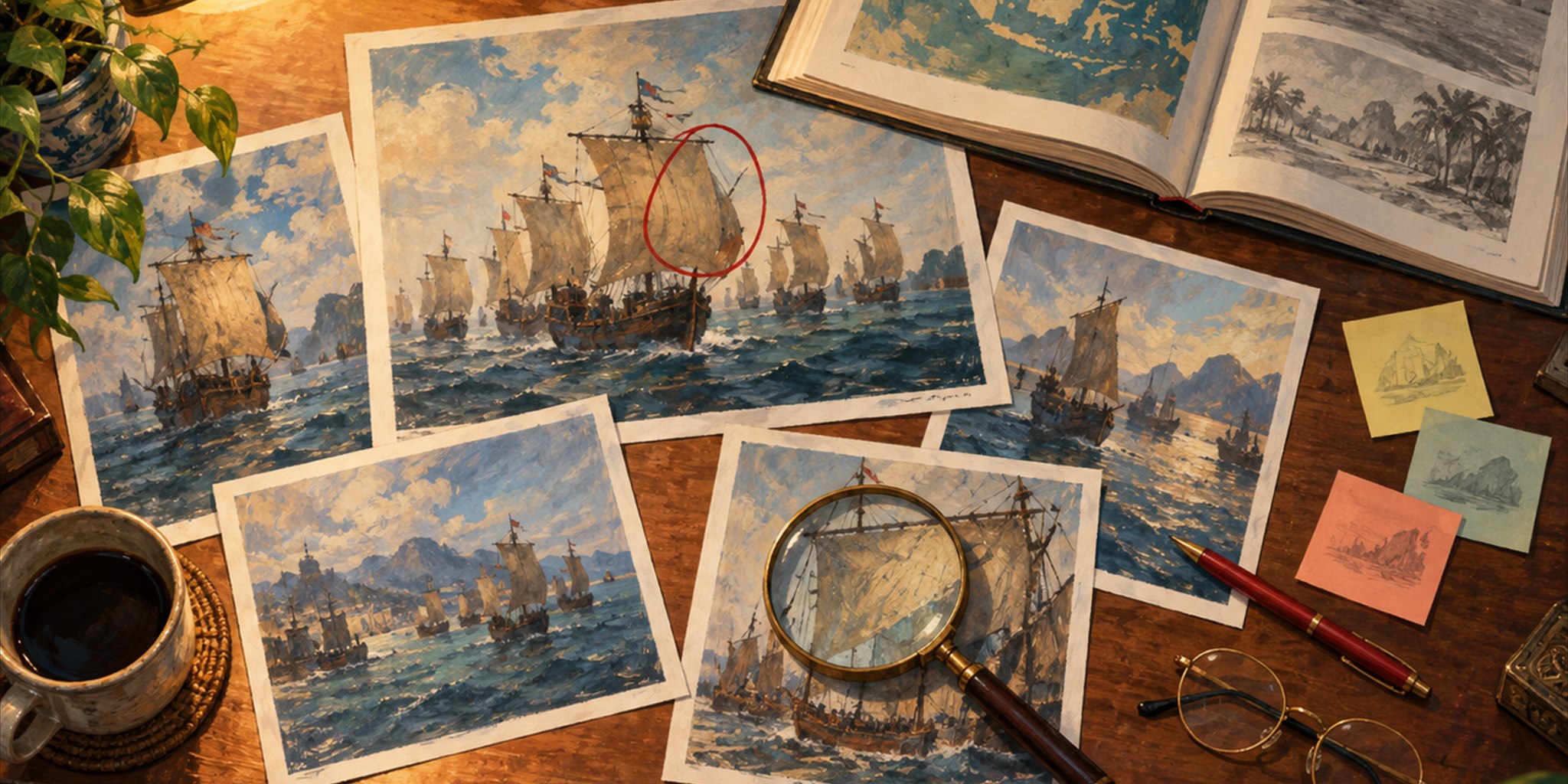
The first time it saved me: a painting of Cheng Ho's fleet arriving in 1409 came back beautiful, and one of the sails carried a red cross. That is a Portuguese symbol, and the Portuguese would not arrive for another hundred years. Thirty students would have seen it and nobody would have said anything, which is worse than someone noticing.
The second time: the narration voice said “Syahbandar” with a hard “s-y”. In Malay, “sy” is said “sh”. A colleague caught it in ten seconds. I had listened to that line six times.
So now I run five checks, in this order, on everything.
- The fact checkEvery date, name and place, against the KSSM textbook. Not against another website, and not against what the tool says. If the textbook and the tool disagree, the textbook wins and I fix the material.
- The time checkLook for things that did not exist yet: guns in 1400, glasses, modern buildings, the wrong clothes, the wrong flags. Zoom in on the edges of the picture. That is where the mistakes hide.
- The people checkNo real, living person. No student's face, name or voice, ever. Historical figures stay as paintings, never a “photo”, so nobody mistakes an imagined face for a real portrait.
- The fairness checkWho looks noble, and who looks like a villain? Are the Chinese, Indian, Arab and Javanese traders all shown with the same dignity? Are there women anywhere in the picture? Are the Portuguese people, or just armour?
- The sound checkListen to every name at full speed. Check the volume against the room's speakers. Make sure the subtitles match what is actually said.
Then two more habits
Label it. Every AI-made picture, voice and song is marked as AI-made, on this site and in the classroom. My students know which parts a tool made and which parts I decided. That is part of the lesson.
Keep the log. I save every instruction I gave the tools for every unit. If a parent or my principal asks how something was made, I can show them exactly. The Melaka log is public.
The tool does the drawing. The checking is the part of the job that is still, completely, mine.
Ten minutes per unit. Print the list and stick it above your desk; the printable version is on the Resources page.
第一次救了我:一张 1409 年郑和船队到达的画生成出来很漂亮,但其中一面帆上有一个红色十字。那是葡萄牙人的标志,而葡萄牙人还要再过一百年才来。三十个学生会看到它,却没人会说什么。没人发现,比有人发现更糟。
第二次:旁白把“Syahbandar”里的“sy”念得很硬。马来语里“sy”应该念“sh”。一位同事十秒钟就听出来了,而那一句我已经听了六遍。
所以现在,每一样东西我都按顺序做五项检查。
- 史实检查每个年份、名字、地点,都对照 KSSM 课本。不是对照别的网站,也不是对照工具说的。课本和工具说法不一样时,以课本为准,然后我去改教材。
- 年代检查找那个时代还不存在的东西:1400 年的枪、眼镜、现代建筑、不对的服装、不对的旗帜。把画面边缘放大看,错误常常藏在那里。
- 人物检查不出现真实在世的人。学生的脸、名字、声音,永远不用。历史人物只用画的,不做成“照片”,这样没人会把想象出来的脸当成真实的肖像。
- 公平检查谁看起来高贵,谁看起来像坏人?华人、印度人、阿拉伯人和爪哇商人,是不是都一样有尊严?画面里有没有女性?葡萄牙人是人,还是只是一堆盔甲?
- 声音检查用正常速度听每一个名字。用教室的音箱试音量。确认字幕和实际说的话一致。
另外两个习惯
标明来源。每一张 AI 做的图、每一段 AI 声音和每一首 AI 歌,在网站上和课堂上都标明是 AI 生成的。学生知道哪部分是工具做的,哪部分是我决定的。这本身也是课的一部分。
保留记录。每个单元我给工具的每一条指令都保存下来。家长或校长问起某样东西是怎么做的,我可以原原本本给他们看。马六甲单元的记录是公开的。
画图交给工具。检查,是这份工作里依然完全属于我的部分。
每个单元十分钟。把清单印出来,贴在桌子上方;可打印版本在免费资源页。
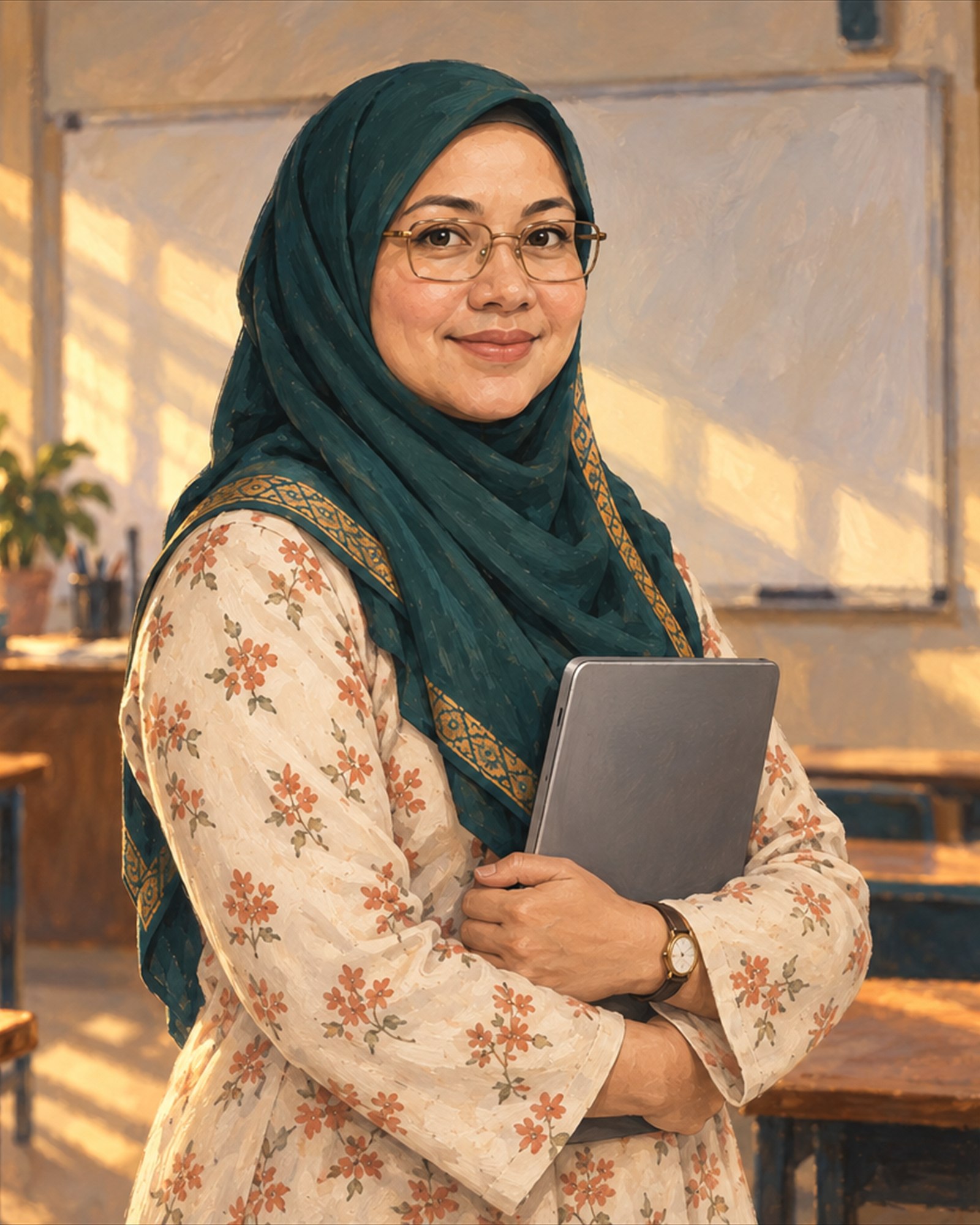 A
Form 2 History teacher in Selangor. Checks every date herself.雪兰莪中二历史老师。每个年份都亲自核对。