Two dates, one chorus两个年份,一句副歌
Why I teach the only dates that matter with a song, and the five rules I follow when I write the lyrics.为什么我用一首歌来教最重要的两个年份,以及我写歌词时遵守的五条规则。
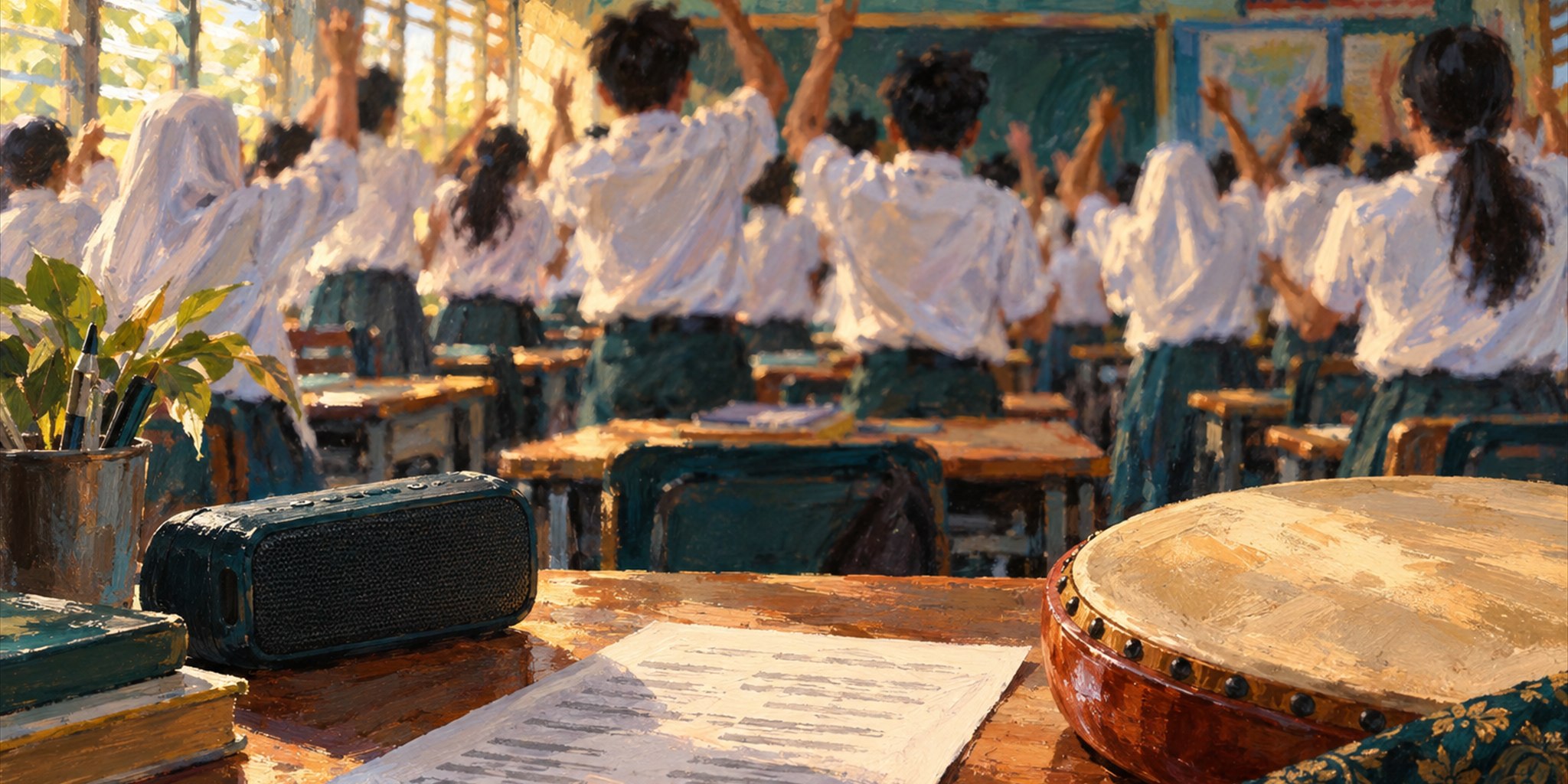
Every year my Form 2 students meet the same two questions. When was Melaka founded? When did it fall? And every year, until this one, about half of them mixed the answers up. 1400 became 1511. 1511 became 1409. Someone always wrote 1957.
It was never a question of intelligence. A four-digit number with no story attached simply does not stick. It is a password with no account behind it.
Why a song works
Three reasons, from watching it happen in my own classroom.
- Rhythm chunks numbers. “Empat-belas-kosong-kosong” is four beats. The date becomes a shape in the mouth, not a figure on a page.
- Call and response makes it social. I sing the first half, they answer. Nobody is singing alone, so nobody is embarrassed.
- Shouting makes it a game. Fourteen-year-olds who will not sing will happily shout. The chorus ends in two shouted words: bangkit and jatuh. Rise and fall.
By week three, they were singing the chorus before I asked. That has never happened with a worksheet.
My five rules for the lyrics
I write every word myself. The music is generated, but the lyrics decide what students remember, so they stay with me.
- The chorus holds only what is examined. Two dates, one verb each. Everything else goes in the verses.
- Say the numbers as digits. “Empat-belas-kosong-kosong”, not “seribu empat ratus”. Digits fit a beat; long number words do not.
- The verses carry the story. The prince, the mousedeer, the four ministers, Hang Tuah at sea. Story is what makes the chorus mean something.
- Every name must survive speed. If “Syahbandar” turns to mush when sung fast, change the line. I ask a colleague who is a native speaker to listen before class does.
- Under two minutes. Mine is under one. It has to fit at the start and the end of a lesson without stealing either.
How the song gets made
I paste my lyrics into a music tool with a short description of the style I want: upbeat, traditional drums under a modern band, a crowd answering the chorus. The tool makes a version in about a minute. I make four.
Then I choose, using one test only: can you hear the dates? Not which one is prettiest. My first choice was too fast; nobody could catch “lima-belas-satu-satu”. I went back and made it slower. The second one is the one my students know.
Try it with your own unit
Pick the two or three facts your exam actually asks for. Write a chorus that holds only those. Then write two short verses that tell the story around them. My song prompt, the one I paste into the music tool, is on the Resources page. Copy it and change the topic.
每一年,我的中二学生都会遇到同样两个问题:马六甲是哪一年建立的?哪一年陷落的?而每一年,直到今年之前,大约一半的学生会把答案搞混。1400 写成 1511,1511 写成 1409,总有人写 1957。
这从来不是聪不聪明的问题。一个没有故事的四位数,就是记不住。它像一个没有账户的密码。
为什么歌有用
有三个原因,都是我在自己课堂上看到的。
- 节奏把数字切成小块。“Empat-belas-kosong-kosong”刚好四拍。年份变成嘴里的一个节奏,而不是纸上的一个数字。
- 一唱一答,变成大家一起的事。我唱前半句,他们接后半句。没有人是一个人在唱,所以没有人会不好意思。
- 用喊的,就变成游戏。不肯唱歌的十四岁孩子,很乐意用喊的。副歌最后是两个喊出来的词:bangkit 和 jatuh,兴起和陷落。
到第三周,我还没开口,他们就先唱起副歌。作业纸从来没有做到过这件事。
我写歌词的五条规则
每一个字都是我自己写的。音乐是生成的,但歌词决定学生记住什么,所以这部分留在我手上。
- 副歌只放考试会考的内容。两个年份,各配一个动词。其他内容都放在主歌里。
- 数字按一个一个数字念。念“Empat-belas-kosong-kosong”,不念“seribu empat ratus”。单个数字能卡进节拍,长长的数字读法不行。
- 主歌负责讲故事。王子、鼠鹿、四大臣、在海上的汉都亚。有了故事,副歌才有意义。
- 每个名字唱快了也要听得清。如果“Syahbandar”唱快了就糊掉,那就改那一句。在学生听之前,我会请一位母语是马来语的同事先听一遍。
- 不超过两分钟。我这首不到一分钟。它要能放在一节课的开头和结尾,而不占用太多时间。
这首歌是怎么做出来的
我把歌词贴进一个音乐工具,再写一小段风格说明:节奏轻快、传统鼓配上现代乐队、一群人应和副歌。工具大约一分钟生成一个版本,我做了四个。
然后我只用一个标准来选:听不听得清年份?不是选最好听的。我第一次选的那版太快,没人听得清“lima-belas-satu-satu”。我回去重做了一版慢一点的。现在学生会唱的是第二版。
用你自己的单元试试看
挑出考试真正会问的两三个史实,写一句只装这些内容的副歌,再写两段短短的主歌把故事讲出来。我贴进音乐工具的那段歌曲提示词,放在免费资源页。复制过去,把主题换掉就可以用。
 A
Form 2 History teacher in Selangor. Makes a film, a song and a game for every unit.雪兰莪中二历史老师。每个单元都做一部短片、一首歌和一个游戏。